Tuesday, April 17, 2018

Research for Assistive Technology and the IEP

Mackie working on his iPad with the Writing Wizard App

Last night I spent a few hours researching and finding resources on getting Assistive Technology into the IEP for Mackie.  With his complex vision, motor and neurological issues he needs Technology to be able to learn.  He has vision issues, but due to his motor needs Braille will not work.  The technology for those with vision challenges use motor.  The technologies for those with autism and/or motor needs are often visual and his vision impacts using those strategies.  He uses his new Novachat for speech and how can we get that into his IEP and enacted.

I started Mac on using the iPad at 22 months and he comes by technology honestly.  With a Triple Autism diagnosis he is technology savvy and sometimes I wonder how he finds all he finds.  For our older daughter Becca she was already on technology in early l992 at the Pacer Center in Minnesota. I know that technology is key to level the playing field for children who have complex learning and motor challenges.

These are the best of my finds for the night and I had requests to share them for others to have when they are preparing for the IEP and Assistive Technology Needs.

Assistive Technology from Wrightslaw

At a Glance: How The IEP Team Decides on Assistive Technology at Understood.org

Writing Assistive Technology into the IEP

Considering Assistive Technology from the Center for Parents Information and Resources

Documenting the Need for Assistive Technology from the Georgia Project for Assistive Technology

I hope these sites help you as you prepare for thinking out of the box and planning the IEP.  I shared them with the IEP team today so we can work together to write an IEP that will help Mac learn and grow!

Anny

Tuesday, January 16, 2018

It's Time to Share Our Expertise: Parent and Caregiver Powered Research


FASD Diagnosis Survey:

I wrote in Tiny Titan, my long procrastinated book. "The Professionals Read the Charts and we Read the Children. When we share our knowledge with one another, we can find answers. "

The professionals have the research and the book learning  and we have had to learn from walking with our children out of necessity and survival.  But since FASD has no dedicated funding stream for interventions and resources to help our kids, we have had to find our own way.

It is time for the Parents and Caregivers to step out and help share our knowledge, our wishes and through surveys unite our voices and use the research to shout to those who will listen.  Not only will we caregivers share our expertise, but partner with the adults with FASD who are the real experts as they live with FASD and have knowledge to share.

Today I launch the first of many surveys.   To the parents and caregivers, please take a couple of minutes and fill out the anonymous survey and help us understand about FASD diagnosis.

FASD Diagnosis

Thank you for helping the FASD cause.

Anny

Fetal Alcohol Spectrum Disorders, The Hidden Diagnosis


If the statistics are now much higher than previously thought and the risk has been known for decades; why is it that so few children are actually diagnosed and why do we not have systems in place to help them?

Because we do not want to talk about it and we have focused on prevention and intervention but have created the interventions to help those affected. In the US monies are put into prevention and because those with FASD have no place to find help and hope.  Currently there is no dedicated service silo when FASD is acknowledge to fit under disabilities and schools have no dedicated qualifier for services as well.

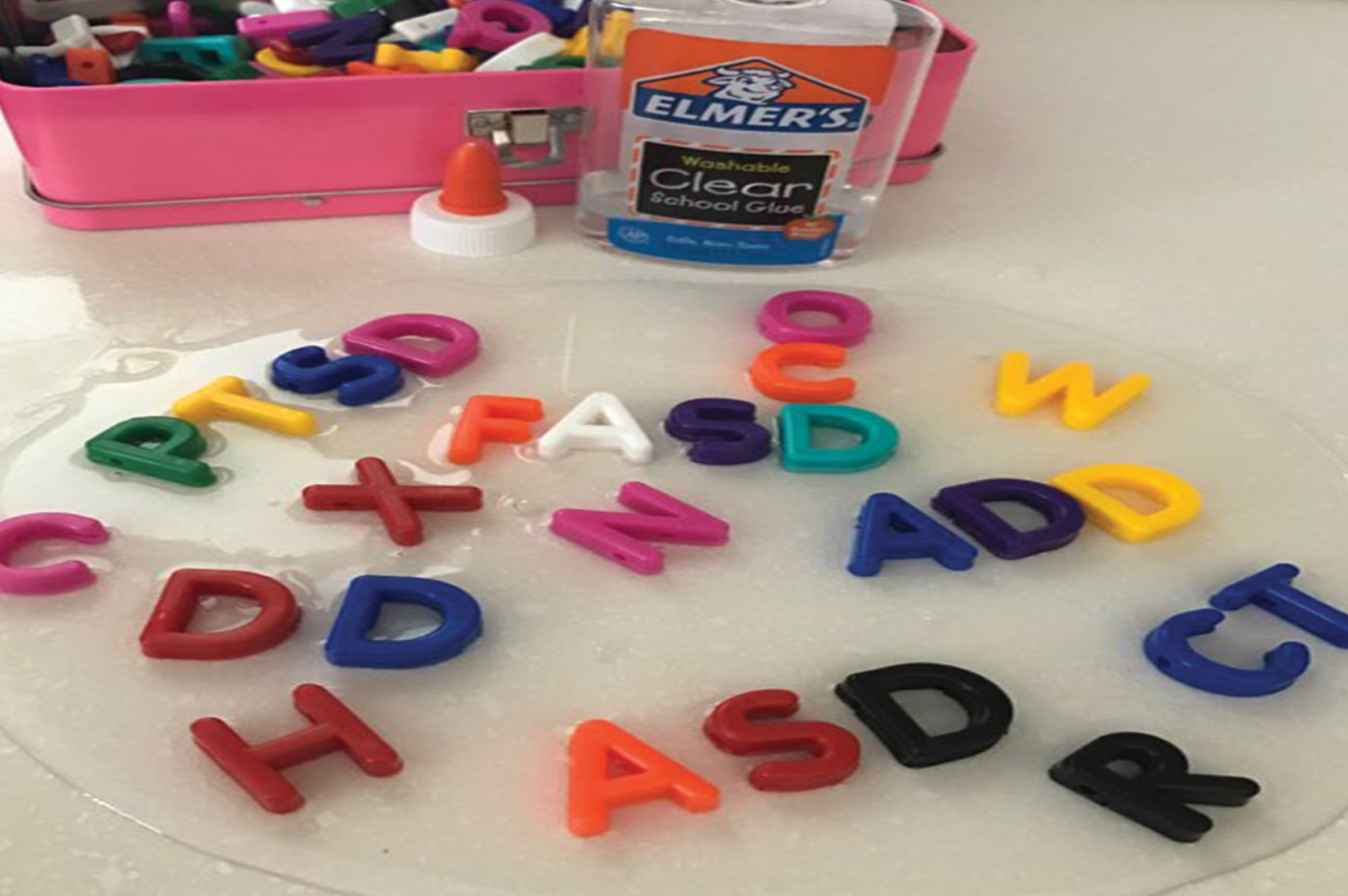
We have come a long way in the last twenty years on knowledge and awareness about FASD but we have a long way to go. When we adopted our children, they did not tell us they were prenatally exposed to alcohol, but the alphabet soup of illegal drugs were highlighted. My children along with many other Children with underlying FASD's will find their diagnoses under the ALPHABET SOUP of symptoms they display.  But for my kids and with playing detective, we found their hidden answers, prenatal alcohol exposures FASD. 

Attention Deficit Hyperactivity Disorder, Attention Deficit Disorder, Oppositional Defiance Disorder, Autism Spectrum Disorder, Bipolar Disorder, Learning Disability, Intellectual Disability or Developmental Delay, Sensory Processing Disorder and so many more.

We look at the symptoms and not the underlying challenge.  When we do not have the full picture we treat the symptoms and they tools we use may or may not help the challenges.

FASD is hard to get diagnosed because it requires admission of maternal exposures.  Often children from the care systems, may or may not have that information and it may hamper finding the answers.
Kids from stable families, FASD is the last thing anyone would ever think of as a problem.  But we know that by the time a Mom finds out she is pregnant, the baby may have inadvertently been exposed.  Mixed messages from the media, doctors, society about the effects of alcohol have contributed as well.  Its time to stop the blame and help us help our children and adults find the underlying understanding.

Kids with underlying FASD are hidden in the Alphabet Soup of Neurodevelopmental Disorders and school labels.  They are everywhere, in every social economic class and it is not just the parents with substance abuse that cause this issue.

The voices of fetal alcohol have been fighting for decades to raise awareness about FASDs. Our voices are getting stronger and a few of us are banding together to continue in the work of Teresa Kellerman, Bonnie Buxton, Brian Philcox, Jocie Devries, Delinda McCann, Vicky McKinney, Bruce Richie, Vicki Russell, Susan Rose and so many more who have walked before us.  The work of Nofas and Mofas helping create the awareness and platforms for us to move forward.

We are stepping out to unite our knowledge and speak up for those who cannot and take our Red Shoes and run with FASD.  We can no longer wait and keep having our loved one fail. 

Every Wednesday I have challenged myself to write on FASD and share what I have learned in my last twenty years of Parenting FASD Kids and Adults.

Anny

Saturday, September 2, 2017

Handling a Meltdown


What is a meltdown?

 The meltdown is a common among children with neurodevelopment disorders and feared and dreaded by both caregivers and the children themselves. Not to be confused with a temper tantrum. A meltdown is caused by overwhelming emotions that are triggered by ...

When a full meltdown is in progress, it can be a hard to manage. Safety -- both for the person and the child and for others in the area is most important.  It is the adults job to remain calm. Most often talking escalates the meltdown. There is no reasoning when the child has hit "the point of no return" as we called it in my house. I learned this one the hard way.

Always observe to make sure that the child is safe and that no one else in in harms way. If you observed that others are in the line of fire, remove them from the premises quietly while watching the melting child.

Often times older children tell us that they do not remember what happened.  After a meltdown the child's energy is spent and the may need time to decompress and so do you! After the meltdown and things have calmed.  It is the adults job to reflect. What was the trigger?  What did we do right? What did not work? Was there any warnings and what could I have done differently to catch it before it hits full meltdown mode.

Often times, we can avoid a full fledge meltdown by watching for the "rumblings" that are often given off by the child prior to the full onset of emotion. In time we begin to know when we are headed to the "point of no return."  And hopefully less meltdowns.

Anny

Wednesday, July 5, 2017

10 Ideas for Working with Kids with FASD - Use Teach Abilities #1


In my now 20 years of working with my kids I have learned many things.  With working with the hundreds of parents through our Parenting FASD closed Facebook group and with the literature a few threads of how to work with these kids come to light.  Every day I will share one of the Teach Abilities and just remember no two kids are alike and what works for some may not work for others.

This is meant for a generalized look at working with the kids.  Teach to the abilities
and support the areas that they struggle with understanding of how prenatal alcohol exposure can affect children and adults learn and see our world.


Kids with FASD will have many strengths and challenges.  They often say that children with FASD will be developmentally half their chronological age.  While that is the generalization,  there will be many areas of uneven and spikes of learning and development.  Each child is different and learning where they function educationally, developmentally and socially is very important for success.

Too high of expectations due to their often times advanced verbal capabilities may be very misleading as they cannot perform at that level educationally, developmentally or emotionally.  Too low they will tune out and act out.  Learning disabilities and challenges are all apart of children/adults on the Fetal Alcohol Spectrum.

Kids with FASD struggle to keep up with their peers and when stressed will use behavior as language to show they are struggling.

Some children with FASD will have many autistic tendencies and struggle with social interactions, while others will be overly outgoing, but struggle with social cueing.  Children with FASD can struggle.  We need to lessen the struggle.

We have made sure with our kids to have adequate testing and assessments to know where they are functioning and not always relying on what the school says.  We made sure to  know where they are educationally, developmentally, and socially so we can modify, adapt and advocate for their needs. Matching the learning to where they child was at that time and many times teaching, reteaching and making sure that that learning was generalized into other environments.

Neuropsychological assessments at key learning stages so we can plan ahead for what they need. We have found that a psychologist or developmental pediatrician helpful in helping us along the way.

Meeting them at their developmental level not chronological age is paramount, doing it with being sensitive to their AGE.

Anny


SaveSave

Sunday, July 2, 2017

Day 24 The Overlapping Behavioral Characteristics of FASD Disorders Printable.

Day 24


I have found the Overlapping Behavioral Characteristics of FASD and Related Mental Health Diagnoses in Children to be the MOST valuable tool to help educate those working with my children and adults. At all my kids IEP's I have provided a copy to every team member when educating about the enormity of Fetal Alcohol Spectrum Disorder.

 Anny

Day 23

Day 23


It is the 4th of July weekend here in the United States.  My kids struggle with the noise of fireworks.
This is the yard sign we put up last year to alert my neighbors.

Anny

Day 22

Day 22


This means for every 100 children two to five will be affected by an FASD.  That means that there are a lot of children who have been affected and are not diagnosed.  FASD is a preventable disorder.

Anny

Day 21

Day 21

Normal parenting strategies do not work with children with FASDs. Please do not compare Caregivers who are caring for children with FASD with "normal" parents. Just like our kids see the world differently, we have learned to parent differently to meet their needs.

 Anny

Day 20

Day 20


Two to Five percent of all children may be affected by an FASD and most will never be identified and given support and understanding for their hidden disability.

Anny

Day 19

Day 19

Remember behavior is language.  Often times it is anxiety or fear that is being expressed as behavior.

Anny

Launching It's Mackie's World

Day 17


Launching It's Mackie's World! 
The Cartoon Adventures of a Real Boy who has is medically complex and has Fetal Alcohol Syndrome.
Follow the Adventures Every Monday 

Anny

All 10 Things You Need to Know About FASD


Day 16

Check out all the links for all 10 pieces.

Anny

Friday, June 23, 2017

10 Things You Need to Know About FASD: #10 It's Preventable

Day 15


The one thing I hope you learned from our 10 Things About FASD campaign is that it is a life-long disability and the numbers of those affected are staggering.  Most do not know they were affected.
Many of those who are affected by FASD's  find help and diagnosis under one of the Alphabet Soup of co-occurring disorders.

The best thing we know about Fetal Alcohol Spectrum Disorder that it is 100% preventable.
No one need to suffer the long term affects and struggles caused by prenatal alcohol consumption.

Think about it, from statistics 50% of all pregnancies are unplanned. By the time the Mother finds out she is pregnant and STOPS DRINKING ALCOHOL is may already be too late.  But stopping any time along the line can help lessen the effects.

No amount of alcohol is recommended for a pregnant Mother.  It may be her right to drink, but STOP and think about the baby who may have their full potential lessened by drinking while pregnant.

You have probably seen the 049 in some of the graphics and here is the explanation.
SUPPORT - 049
0 = Zero
4 = Four
9 = Nine
for Nine Months - Support Friends and Family's Sobriety through their Pregnant Pause to encourage building better baby brains.

Spread the word and thank you for taking the time to learn about FASD.

Anny

Thursday, June 22, 2017

10 Things to Know About FASD: #9 Wise Words From the Experts

Day 14


We asked those participating with the  90 Real People with Real Lives campaign we asked them their one wish.  This slide is not for me to write.  It is their voices, their wishes.

"Anna wishes to be seen for who she is and not for her disability."  from her Mom

"To help others like him in the same way many individuals helped him." from an adult with FASD

"For people to understand that because I look ‘normal’ my brain is not. I am not a ‘bad’ kid or a spoiled brat my brain just cannot process things like yours can. I want friends and can be very loyal. Take a chance and get to know me!"  from a child with FASD

"I just wish my Mom had cared more about me than drinking alcohol. She made it hard for me and it didn't need to happen."  an young adult with FAS

"Jonathan has many wishes!…no more babies born with FASD’s, healing for those who have it, unconditional friendships and acceptance by others." from Johnathan's Mom

"Angelo’s wish would be for no other mom’s to drink while they were pregnant so that other children would not have trouble thinking like he does.  He wishes that he could ‘think straight’."
from Angelo and his Mom

"I wish she knew how much she was loved".  from a parent of a child with FASD

"She just wants to be loved and accepted for who she is, and not feared for what she is capable of doing. To not be loud or lose control. To not get so mad she hurts the ones she loves but can’t remember why?"  from a Parent of an adult with an FASD

"For people to understand and not judge, for people to not assume that just because I look and can act neurotypical, that I am not neurotypical. (That can be really frustrating). And to be treated the same as everyone else." an adult with an FASD

"To never have anyone go though what I did with living with FASD." an adult with an FASD

"Tiana wants people to know that just because I have FAS and have some problems that I am no different from anyone else."  a wise young lady with FAS

 "My wish is that people living with FASD receive SERVICES AND PROGRAMS. Services that accommodate, and programs that coach them to manage their FASD, help them to move forward with their dreams and goals, to understand FASD even if its a little bit at a time. For the world to understand what FASD is like, LIVING ON A ROLLER COASTER THAT NEVER STOPS BUT WE CAN RIDE THE RIDE WITH JOY, LOVE, EXCITEMENT, AND STAY HEALTHY!" well said by an adult with an FASD

"Educate to Erase #FASD"  Thank you Rebecca an adult with an FASD

Wednesday, June 21, 2017

10 Things to Know About FASD: #8 Think Beyond Chronological Age

Day 13


With working with kids and adults with FASD's we need to look beyond chronological age. We need to meet them where they are function and adjust our expectations.

A child's chronological age is their age based on their date of birth. Their developmental age is the age at which they function emotionally, physically, cognitively and socially.  While a child with FASD may be 8 years old, they may be functioning very much younger.  Often times kids with FASD are functioning at half their chronological age.

 Think about it.                                        
                                             Developmental Age Equivalent
Actual Age                            18 years
Expressive language             20 years
Comprehension                      6 years
Money and time concepts      8 years
Emotional maturity                 6 years
Physical maturity                  18 years
Reading ability                      16 years
Social skills                             7 years
Living skills                           11 years

*Streissguth, A.P. & Kanter, J. (Eds.) (1997). The Challenge of Fetal Alcohol Syndrome: Overcoming Secondary Disabilities. Seattle: University of Washington Press.

Understanding that there is often a difference between a child's chronological and developmental age will help caregivers and professionals have more realistic expectations for the child with an FASD.

Age Appropriate Expectations versus Developmental Age Appropriate Expectations

It can be easy to think of kids who don't meet typical milestones as being younger than they are or  if they are small and appear much younger.  But it can be confusing for all when a child physically and cognitively appears to be say 13, but emotionally acts like he is 6.  They child wants to be like everyone else, but struggles with peer relationships and emotions due to his developmental lag which makes it even harder on everyone.

For parents and caregivers we need to set up a child for success by meeting them at their developmental age with fun, learning and structure.  All the while taking into account the individual strengths and challenges of each individual child with FASD.

For adults with FASD because of the developmental lag a delay in the full responsibilities of adulthood may be a protective factor.  Imagine sending a 9 year old into the real world with little to no support when they are 18. For adults with FASD we need to meet them where they function and give them the circle of support tailored to their needs for life.

Anny

Tuesday, June 20, 2017

10 Things To Know About FASD: We Talk Too Much


Day 12


One of the biggest challenges about working with adults and children with FASD's is that often need help with interpreting what is being said and they need it presented in a way that they can understand.   

When talking with my daughter, she tells me the teachers talk like the teacher from Charlie Brown. Unlike Peppermint Patty, my daughter would sit there quietly trying to process what was being said.


She would watch what the others were doing to see what book to take out, what page to turn to or whatever they were doing for a cue to know what to do next. In first through third grades, she did great in a classroom where she was mainstreamed with kids with hearing challenges due to the interpreter and the all the visual instruction!  When they took away what worked she struggled.

Sometimes we speak too fast and part of the dialogue is lost in translation.  Think about missing key words in an instruction and to later learn after the fact that you did exactly opposite what was expected due to missing part of the instruction.   For my Mackie, he does not process Do not. He hears the instruction first and completely misses the do not.  So he does the vary thing you asked him not to do again and again.   So if we tell Mac  "Do not hit the cat."  He will hit the cat again and again again until we we change the command. We have learned that we need to tell him what to do instead. "Be nice to the cat!"

We talk too much with persons with FASD. We need to talk slower, simpler and know how the person with FASD needs us to communicate. We may need to give 30 to 45 seconds for processing and then allow more time for them to  access their response.   Others may need repetition or it written to process the understanding.

With my 6 with FASD's each have their own individual strengths and challenges. No two are alike. While one may be able to process normal spoken language, when disregulated or off balance,  he may need back up written messages.  Texting with my adults with FASD has been a very wonderful tool for me to use when communicating and they can go back to double check the instruction if they forget.

A couple of my kids are athletic.  But for one, she was fast!  She as an eighth grader ran times that would have qualified her for the state meet her brother attended.  She has a processing delay.  She was always late off the starting line.  She didn't hear the starting gun.  She didn't go until after the racers were off their mark.  She still moved on to win the race. But she was getting yelled at by the coach for her delayed starting.  I stepped in and talked with the coach and we got someone who gave her a hand signal (accommodating her the same they would a deaf runner).  She shaved seconds off her time.  She shined.  But high school happened, state rules interfered and she once again was frustrated by not knowing when to go and quit track. Today I would have known better how to fight for her right to accommodation. 

The saying "Hear it and they often forget. See it and they may remember it."  It is a must to remember with many with FASD's as they use visual memory much better than anything given auditory.

Advice from someone who had to learn the hard way.  I thought they understood. Sometimes he could tell  me verbatim what I said right after the fact.  Other times they would agree and would tell me they will do it or they could do it. But not.

 Just because a person with FASD can answer the question and know the answer does not automatically mean they understand what you said.  Double check for understanding and be ready to explain -- connect the dots for what they are missing.

In some with FASD's  due to executive function deficits, cause and effect challenges what they know and say cannot always be put into action.  It may even be understood in one way and may not even work in reality. And what one day they can do, may not happen tomorrow. What is known in one setting may not be translated into another.

Can I say this is complex stuff?  Think about how frustrating it is to have processing challenges in our complex world due to no fault of their own.

We would not expect a deaf person to go to an appointment with out an interpreter have a tool to hear. Persons with FASD need help with cognitive translation in ways for them to process and have full understanding of our complex fast moving world.

I have gone with my adult children to SSI, Medicaid, coaching job interviews from afar. I have helped connect the dots with the justice system and translate the legal jargon to my child. I am there as their interpreter, coach and friend to make sure that they expand their confidence and supported. 

It has been a l9 year learning curve and I am still learning.  My adult kids with FASD are more open now to helping me understand.  They have developed many tools and ways to help compensate and they are amazingly resilient. They each have incredible gifts and talents and we need to help support and accommodate the challenges.

Anny

Monday, June 19, 2017

10 Things About FASD #6: The Struggle with "Normal"

Day 11


Prenatal alcohol exposure can cause permanent life long challenges and each person is affected differently.  Those with FASD can have memory difficulties, processing, auditory, visual and sensory processing issues.

For those affected, no two are alike, but these common difficulties in some degrees affect the majority.

Prenatal alcohol exposure can affect any system of the body including they eyes and the processing of visual information and there are over 428 different diagnoses associated with FASD's.

People with FASDs have a hard time with memory and learning. More than not, a person with FASD is living a moment to moment existence .  My youngest daughter was found at the age of 16 through her a neuropsychological examination to have a profound memory disorder.  I knew that she would often live in the moment and she really does forget. My daughter is just like Dory from Finding Dory. She tells me that she has young people's Alzheimers, except she never could remember in the first place. But she is amazing with electronics.

The reason for these memory and learning problems is that alcohol exposure interferes with brain development. It can reduce the size of certain regions of the brain and can hamper communication between the different parts of the brain.  When that communication throughout the brain doesn't work smoothly, people tend to have problems with executive function.

Executive function is the mental processes that allow us to plan, focus, learn from experience, prioritize and in other words get things done and remember to get things done and why. Persons with FASD will have executive function deficits in some way or another.

Executive function deficits:
https://www.understood.org/en/learning-attention-issues/child-learning-disabilities/executive-functioning-issues

Auditory processing disorder:
Auditory processing disorder (APD), also known as central auditory processing disorder (CAPD), is an umbrella term for a variety of disorders that affect the way the brain processes auditory information.
http://www.asha.org/public/hearing/Understanding-Auditory-Processing-Disorders-in-Children/

Sensory processing disorder:
Sensory processing disorder (SPD; also known as sensory integration dysfunction) is a condition  when multisensory integration is not adequately processed in order to provide appropriate responses to the demands of the environment. 
http://www.sensory-processing-disorder.com

Receptive and Expressive Language disorders:
An Expressive language disorder is an impairment that makes it hard for someone to find the right words and form  clear sentences when speaking.  A Receptive language: It can make it difficult to understand what another person says. Some may have both.
https://www.understood.org/en/learning-attention-issues/child-learning-disabilities/communication-disorders/understanding-language-disorders

Persons with FASD due to no fault of their own, everyday will struggle with what comes easily to the rest of us.

When a person with FASD is stressed, they will struggle more with accessing, processing information and regulating their emotions and life can be even more complicated.

Patience and understanding will go a long way to make it easier for them.

Anny

Friday, June 16, 2017

10 Things to Know About FASD: #5 FASD Is Life Long!

Day 8

For those with FASD diagnosis is paramount. For those who grow up with having an FASD and have early diagnosis and intervention we give them a step up and hopefully more resilience and a better future.


Fetal Alcohol Spectrum Disorders is a permanent life-long condition and there is no cure.

Having FASD will not go away!  No not ever!

For those with FASD diagnosis is paramount. For those who grow up with having and FASD and have early diagnosis and intervention we give them a step up and hopefully more resilience and a better future.

Most of my adult children with FASD due to their normal IQ, have had to fail first before getting help.  The only hope for services is when their secondary mental health needs go into crisis.  In mental health they use the recovery model.
Recover from FASD?

I have seen that my adult kids do better once services are put in place.  Once the secondary mental health needs get stable, the systems pull back the vary services that led to the stability.  Thus creating a roller coaster of failures.

For the persons with FASD who fall into the developmental disabilities services it is far more understanding.

We need a CATEGORY under the disabilities Silos of support that persons with FASD can find appropriate services without having to find their services after they fail enough to develop secondary mental health and secondary disorders.

FASD does not need to be HOPELESS!

Anny

Thursday, June 15, 2017

10 Things To Know About FASD: #4 Most People with FASD have Normal Intelligence

Day 7


Most people with FASD will have normal intelligence and their are those who have high intelligence and are gifted but they can still struggle. Prenatal alcohol exposure is a leading cause of prenatal neurological challenges.

According to one study, 86% of individuals with FASD have an IQ in the "normal" range and do not qualify for services for developmental disabilities.  They nevertheless have impaired mental functioning caused by brain damage that is permanent and irreversible.

According to Streissguth and other studies, the higher the IQ the more persons with FASD are misunderstood and have poorer outcomes.   Those with the hidden neurological challenges and appear normal are set up for expectations that they cannot meet.  Schools, society and employers cannot see their hidden challenges.

Think Developmental Age and Chronological Age.  This can be hard as they are often times functioning well below their Chronological Age.  But they do not want to be treated differently.

Understanding in Adults with FASD from Nofas

Often times their strong verbal skills can hide or mask the deficiencies and it can be confusing to those working with them.  My kids would have memorized the answers and may not be able to put into practice what they know.  Executive function, memory, social skills, cause and effect are all can be affected.  I have learned in my 20 years of working with those with FASD that they can be good actors. They have learned to mimic normal and when you double check for understanding often times they cannot explain.   People with FASD can be vulnerable to suggestion and wanting to be accepted can lead to victimization.  They can struggle with predicting outcomes and having a trusted people to coach and problem solve need to be part of transition and lifelong planning.

Secondary Disabilities in FASD.
Over 90 to 98%  of those with FASD will have or develop secondary mental health challenges.

According to research only 8 percent of those with an FASD will live independent successfully. The rest will need a spectrum of support geared to their own unique needs.

What happens when we do not support those with FASD in adulthood adequately?

Check out the statistics

Families know all too well.  On our Parenting FASD Teens and Adults caregivers and parents share our challenges and our grief at just how hard it is to find support and understanding for our Teens and Adults with FASD.   Most will struggle with jobs, qualifying for disability services and their "normal IQ" The adults with FASD especially in the transition years of 17 to 27 the lessons are often learned the hard way by all involved.

Persons with FASD need a circle of support.  As we advocate for those with Fetal Alcohol Spectrum Disorders we lifelong person centered supports tailored to each individuals strengths, challenges and choices so they can live successfully in our communities.

Anny